FlixNFood

From Jiro Dreams of Sushi

Tamagoyaki (Sweet Egg Sushi)

dessert · Reconstructed

Servings
4
Cuisine
Japanese
Difficulty
Hard
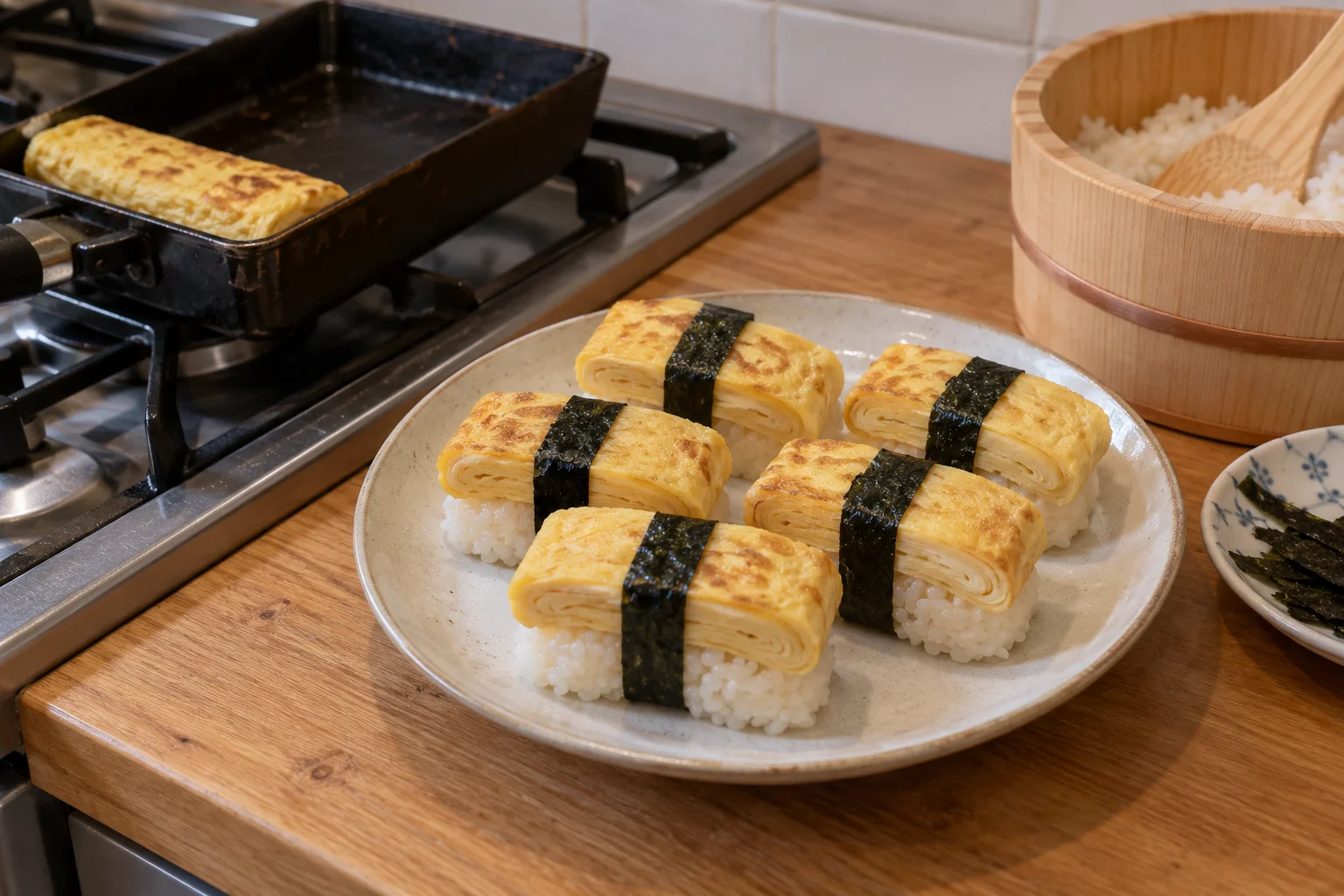
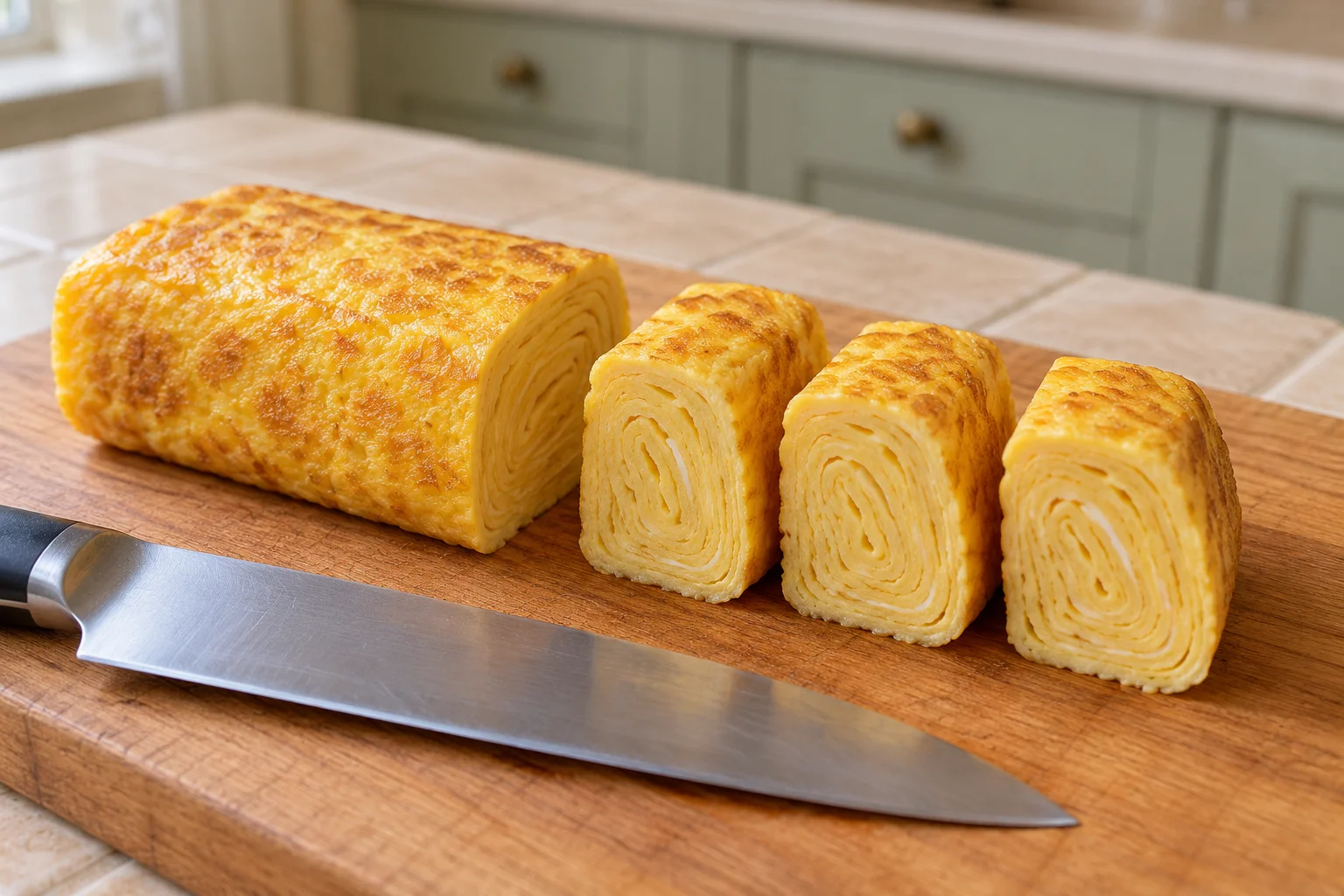
Tamagoyaki (Sweet Egg Sushi) (AI-generated illustration)
AI-generated illustration. This image is not evidence that the recipe has been kitchen-tested.

Ingredients

Method

This home version makes a rolled omelette with dashi, mirin and soy sauce, served on sushi rice with nori. It is an interpretation of the film's egg-sushi moment for home cooks.

For the optional strained preparation, pass the beaten seasoned egg mixture through a fine sieve. (AI-generated illustration)
Step 1: For the optional strained preparation, pass the beaten seasoned egg mixture through a fine sieve. AI-generated illustration.
  1. Whisk the eggs with the dashi, sugar, mirin, and soy sauce until smooth, straining if you want a perfectly even texture.
  2. Heat a rectangular tamagoyaki pan over medium-low heat and wipe it with a little oil. Pour in a thin layer of egg mixture, tilting to cover the base.
  3. As it just sets, roll it toward you, then push it back, oil the pan again, and pour in the next thin layer, letting it bond to the rolled egg. Repeat until all the mixture is used.
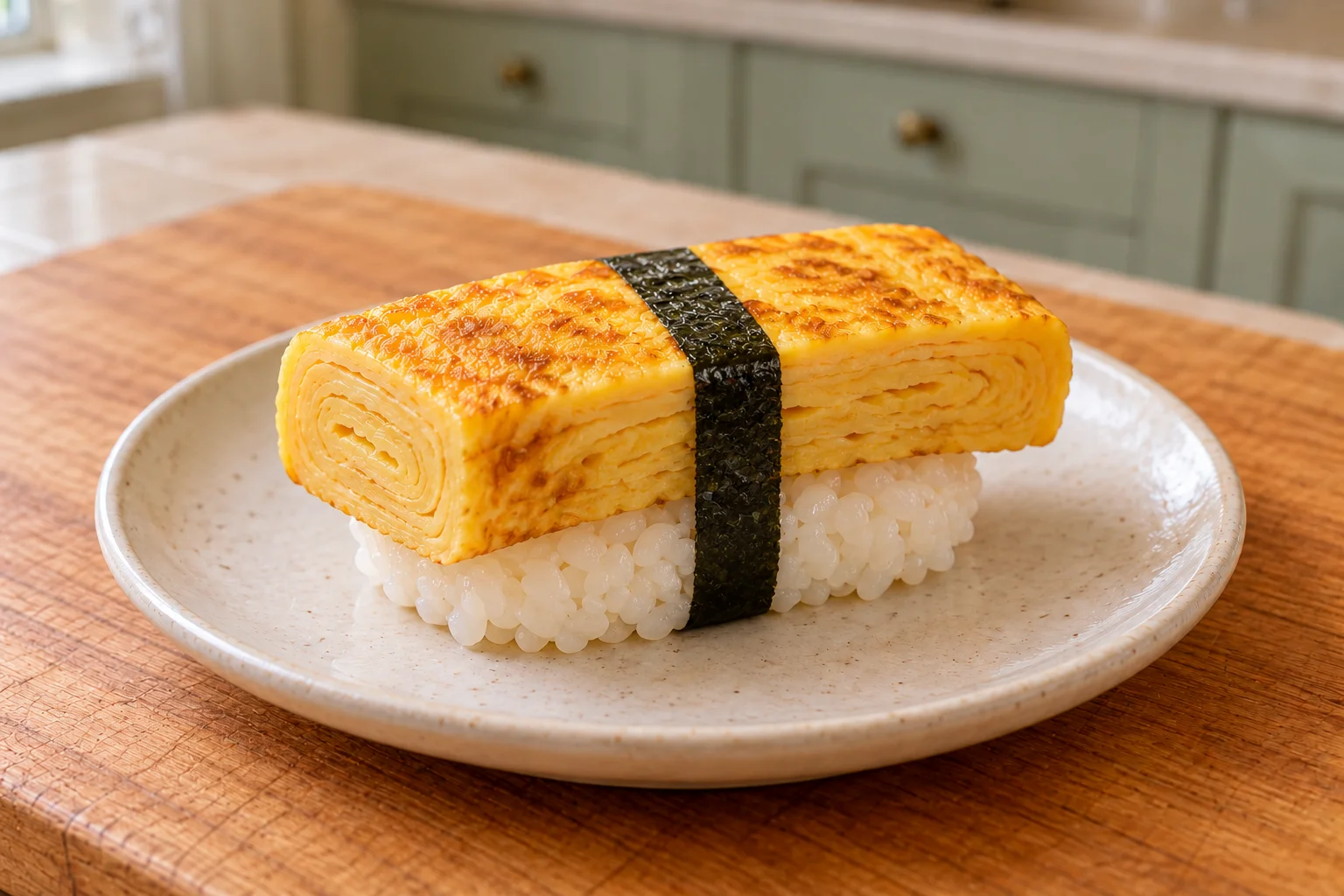
  4. Slice the finished roll into thick rectangles, set each on a small mound of sushi rice, and wrap with a thin strip of nori to hold it together.
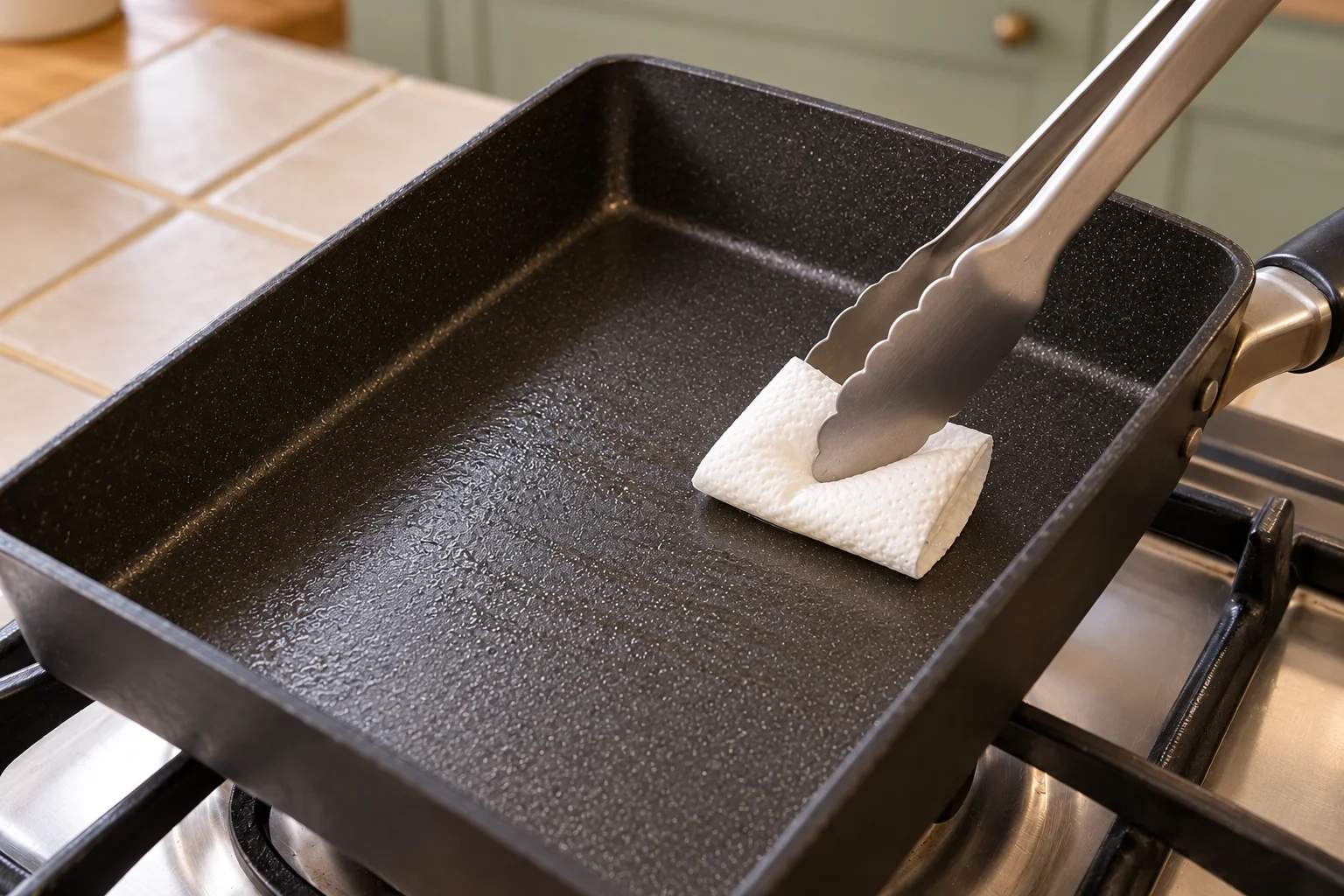
A folded paper towel held in tongs wipes a thin film of oil over the rectangular pan before egg is added. (AI-generated illustration)
Step 2, pan preparation: Wipe the rectangular pan with a little oil before pouring the first egg layer. This view shows the oil-wiping action, not a measured pan temperature. AI-generated illustrations.
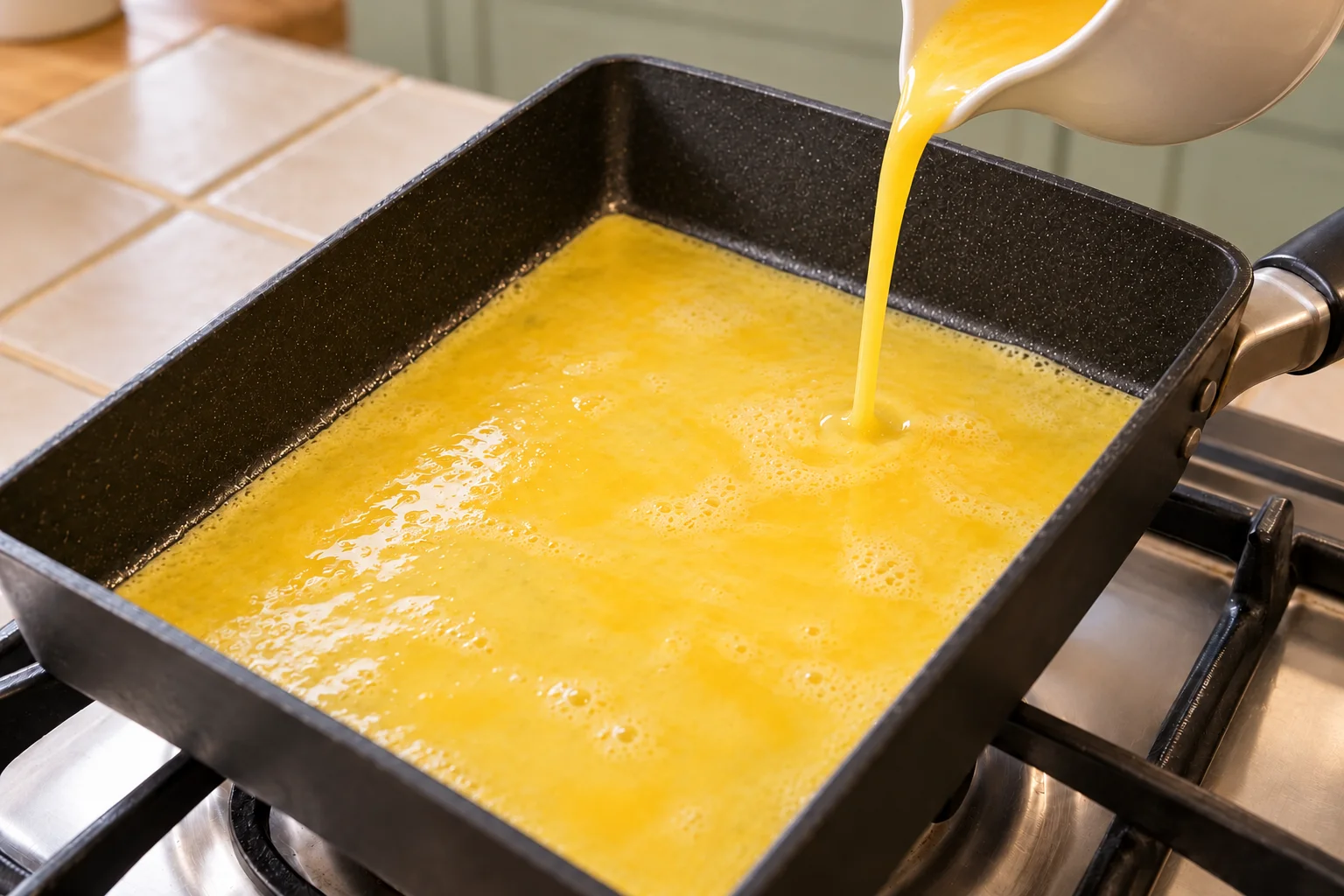
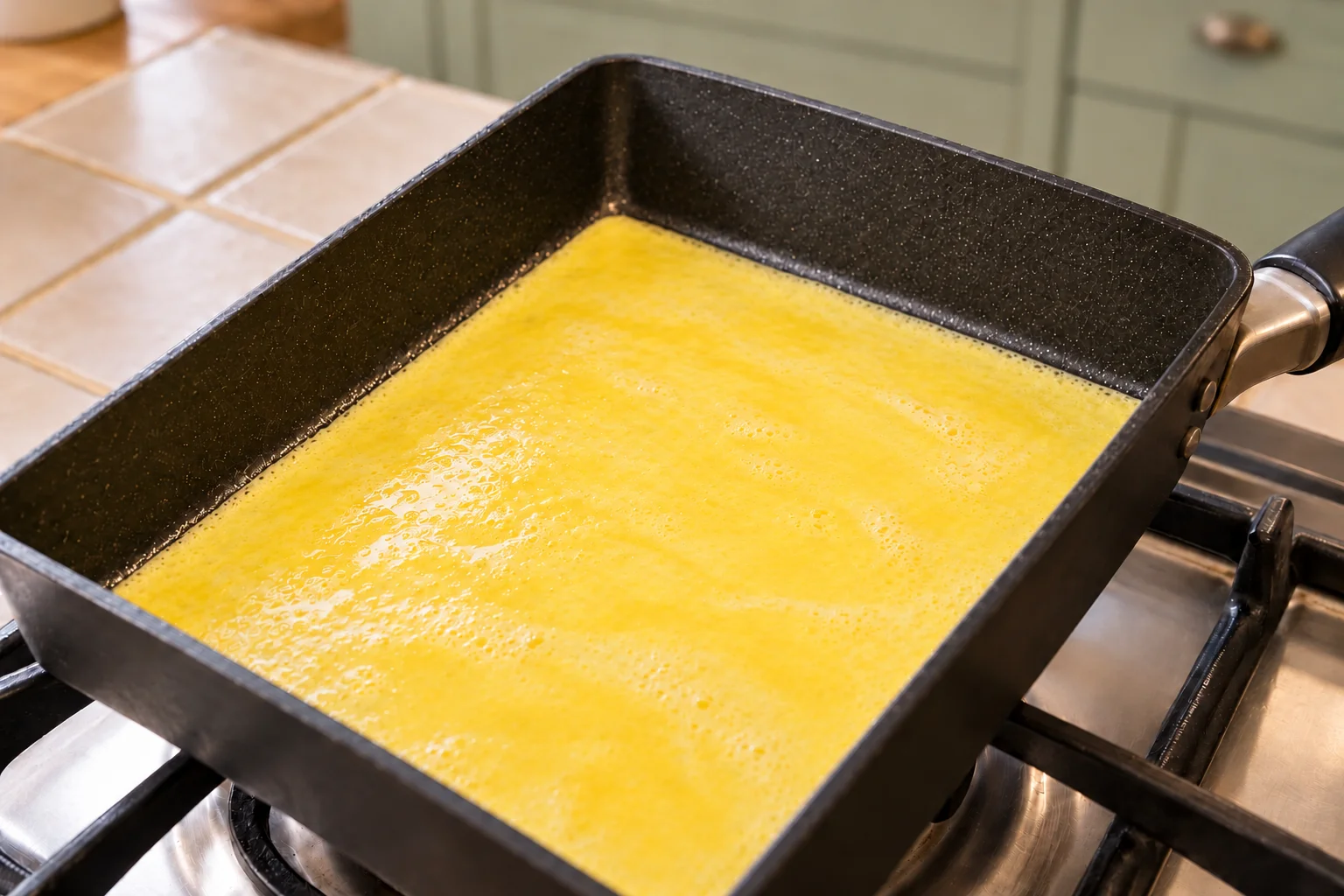
Pour the first thin layer of egg mixture into the oiled rectangular pan. (AI-generated illustration) The first thin egg layer is flat in the pan before rolling begins. (AI-generated illustration)
Steps 2–3, first layer: Pour a thin layer of the egg mixture over the pan base (top); the next view shows the flat layer before rolling begins (bottom). Roll it just as it sets. AI-generated illustrations.
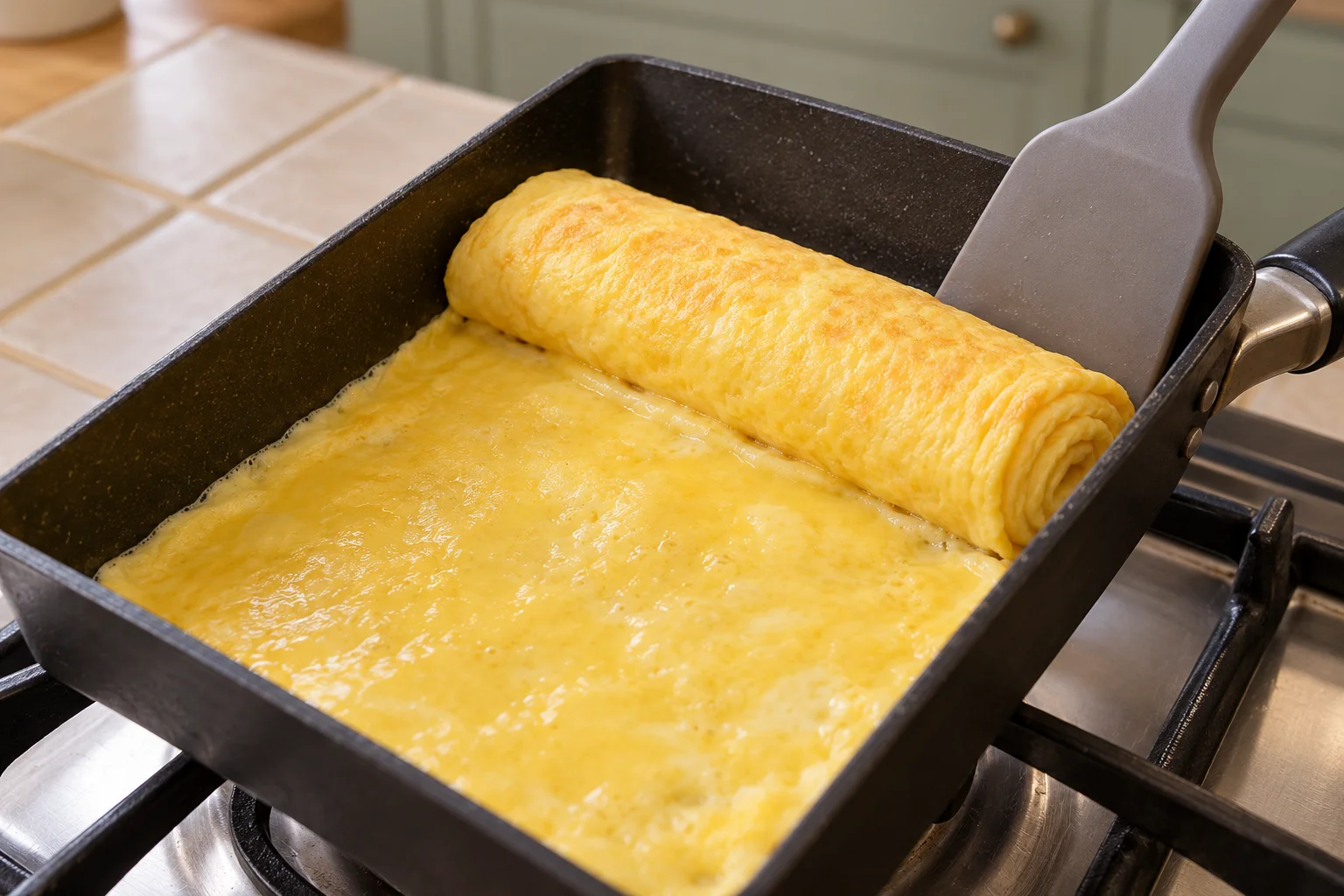
Let each new thin egg layer meet the rolled egg before rolling again. (AI-generated illustration)
Step 3: Let each new thin egg layer meet the rolled egg before rolling again. AI-generated illustration.
Slice the rolled egg before placing pieces on sushi rice and adding nori. (AI-generated illustration)
Step 4: Slice the rolled egg before placing pieces on sushi rice and adding nori. AI-generated illustration.
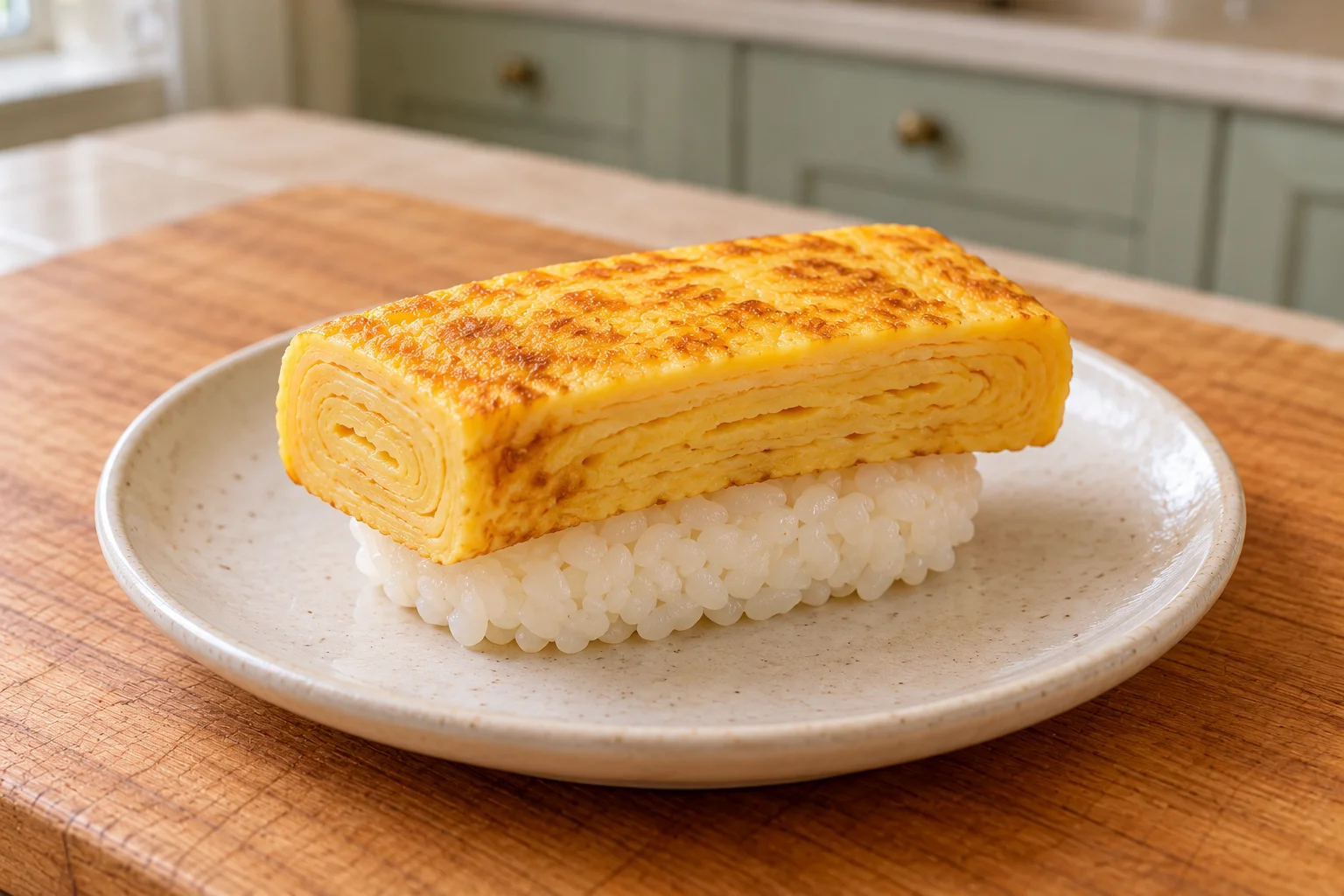
Set a thick slice of the rolled egg on a small mound of seasoned sushi rice before adding nori. (AI-generated illustration) A thin strip of nori wraps around both the rolled-egg slice and sushi rice. (AI-generated illustration)
Step 4, home-version assembly: Set a thick slice of rolled egg on a small mound of sushi rice (top), then wrap a thin nori strip around egg and rice to hold them together (bottom). These views show the home recipe, not the restaurant's own formula. AI-generated illustrations.

In the movie

Theatrical

  • 00:49:26 Apprentice Daisuke Nakazawa recounts the milestone: after over 200 rejected attempts across months, Jiro finally approves one — 'Now this is how it should be done' — and calls him a shokunin for the first time.

Tamagoyaki closes Jiro's tasting menu alongside sea eel and a pickled-gourd roll, but the film's real focus is what it costs to be allowed to make it: apprentices spend roughly ten years on menial work before they're even permitted to touch the eggs. Daisuke Nakazawa describes making over two hundred rejected versions before Jiro finally approved one — and the moment Jiro called him a shokunin for the first time is the one he says he wanted to punch the air over.

Serve when

The dish that closes the meal — and, for an apprentice, the one you don't get to touch until you've earned it.

Beyond the recipe

Watch & shop

As an Amazon Associate, FlixNFood earns from qualifying purchases.