
From Midnight Diner: Tokyo Stories · 2016-2019 · Reconstructed
Sweet Rolled Omelet (Tamagoyaki)
- Servings
- 2
- Cuisine
- Japanese
- Difficulty
- Medium
Serve when
Serve when Mr. Lee, the film producer's son, describes the only thing he remembers about the actor he's been searching Tokyo for: he loved tamagoyaki.
Before you start
Whisk the egg mixture ahead; the rolling itself only takes a few minutes over the stove.
Cook-along start: ~0:10
Scene cue: Roll the last layer of egg together right as the standoff between the two crews resolves into farce — the tamagoyaki is what breaks the tension.
In the series
Season 2
- S2E9 · ~00:14:20 Mr. Lee, searching Tokyo for an actor from his late father's unfinished film, recalls that the man's one clear memory is a love of sweet tamagoyaki
Tamagoyaki is the one clear thread a man has to an actor he's never met: his late father's unfinished film, and a single detail passed down about the star's favorite dish. It's a strange, almost slapstick episode that lands on a sincere point — sometimes food is the only memory that survives.
Ingredients
Method
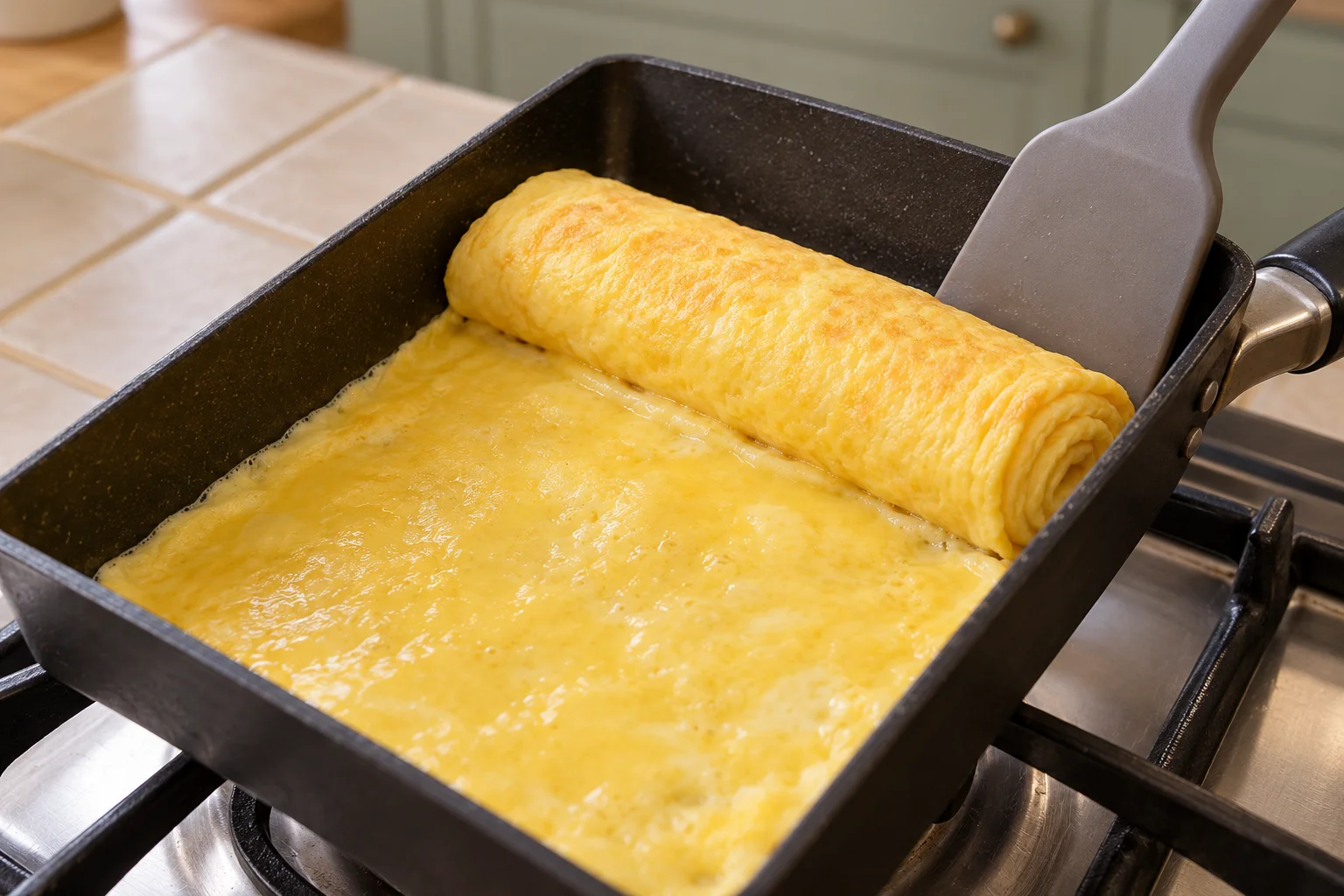
- Whisk the eggs with sugar, soy sauce, mirin, and dashi until the sugar mostly dissolves.
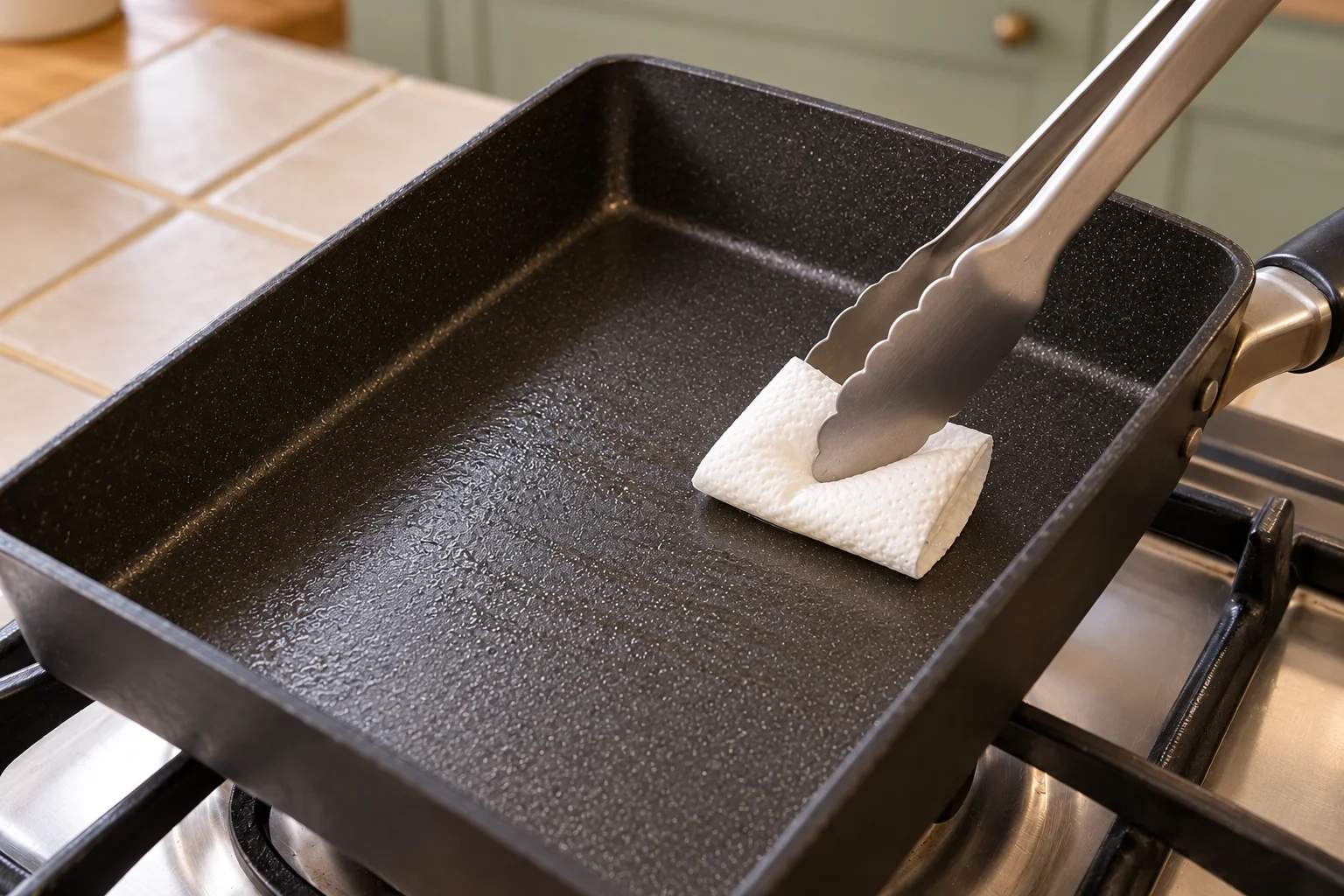
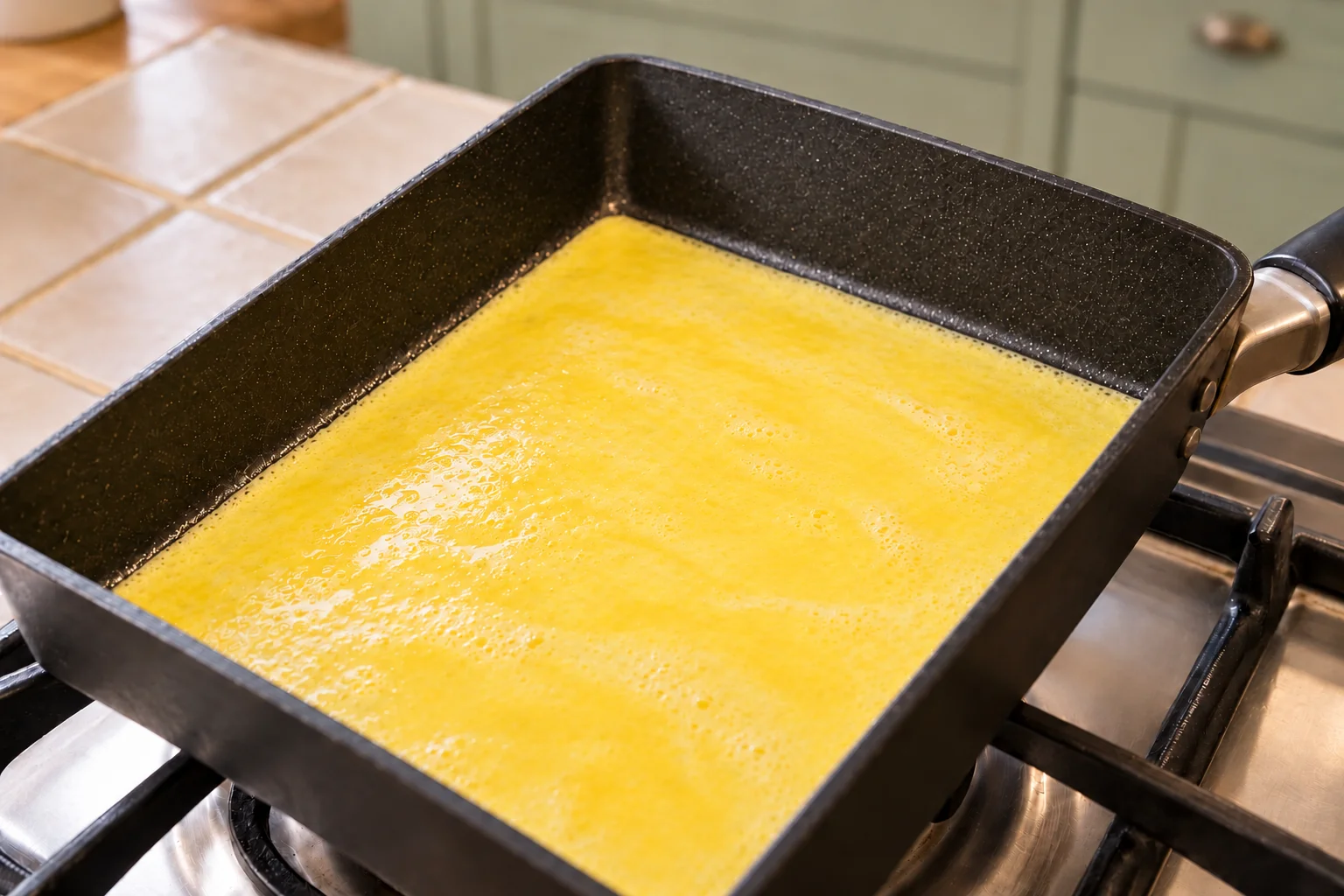
- Heat a rectangular tamagoyaki pan (or a small nonstick skillet) over medium-low heat and lightly oil it.
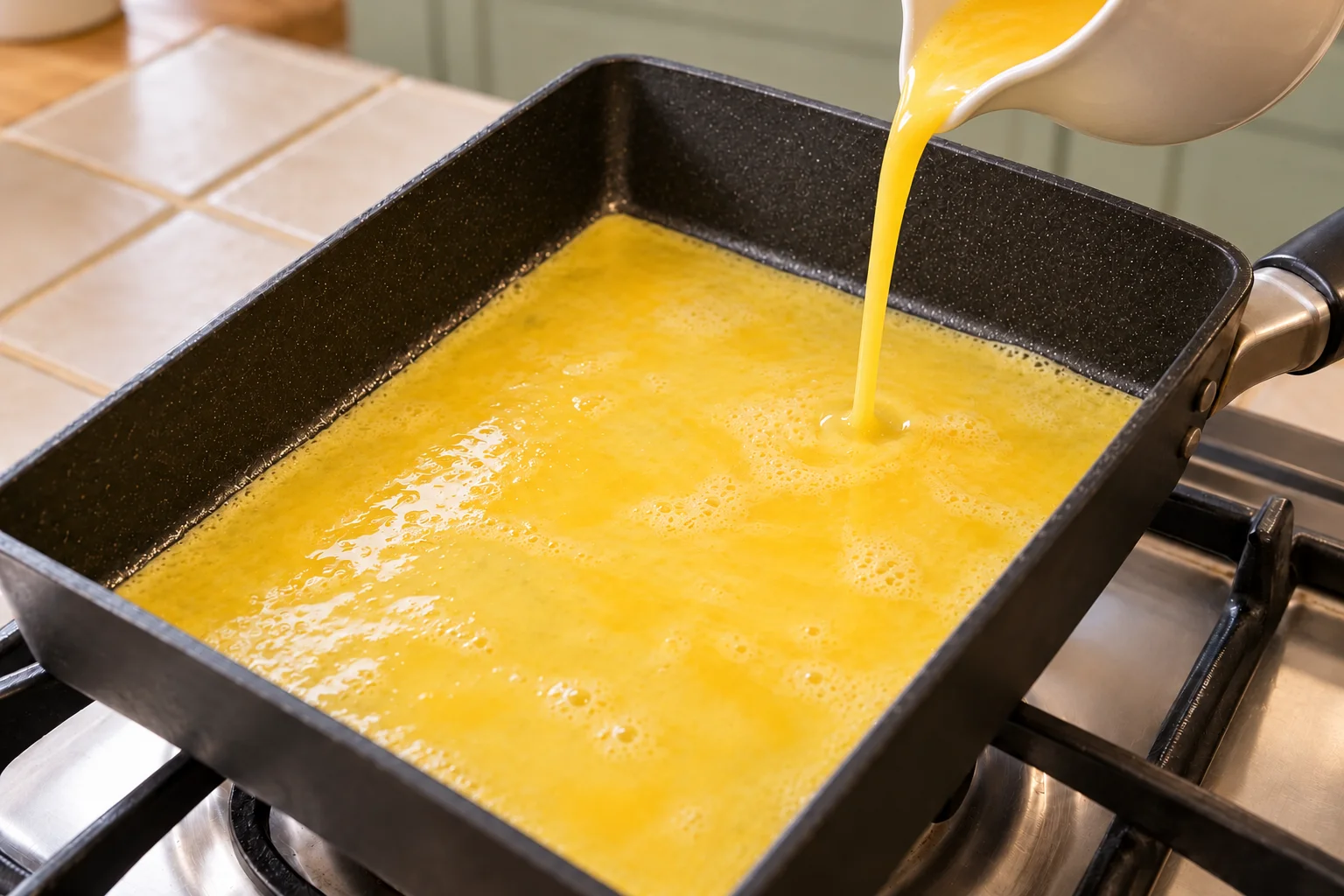
- Pour in a thin layer of egg mixture, tilting to coat the pan. When mostly set, roll it up toward one side.
- Oil the pan again, pour in the next layer, letting it run under the rolled egg, and roll again. Repeat until the egg is used up, building a thick log.
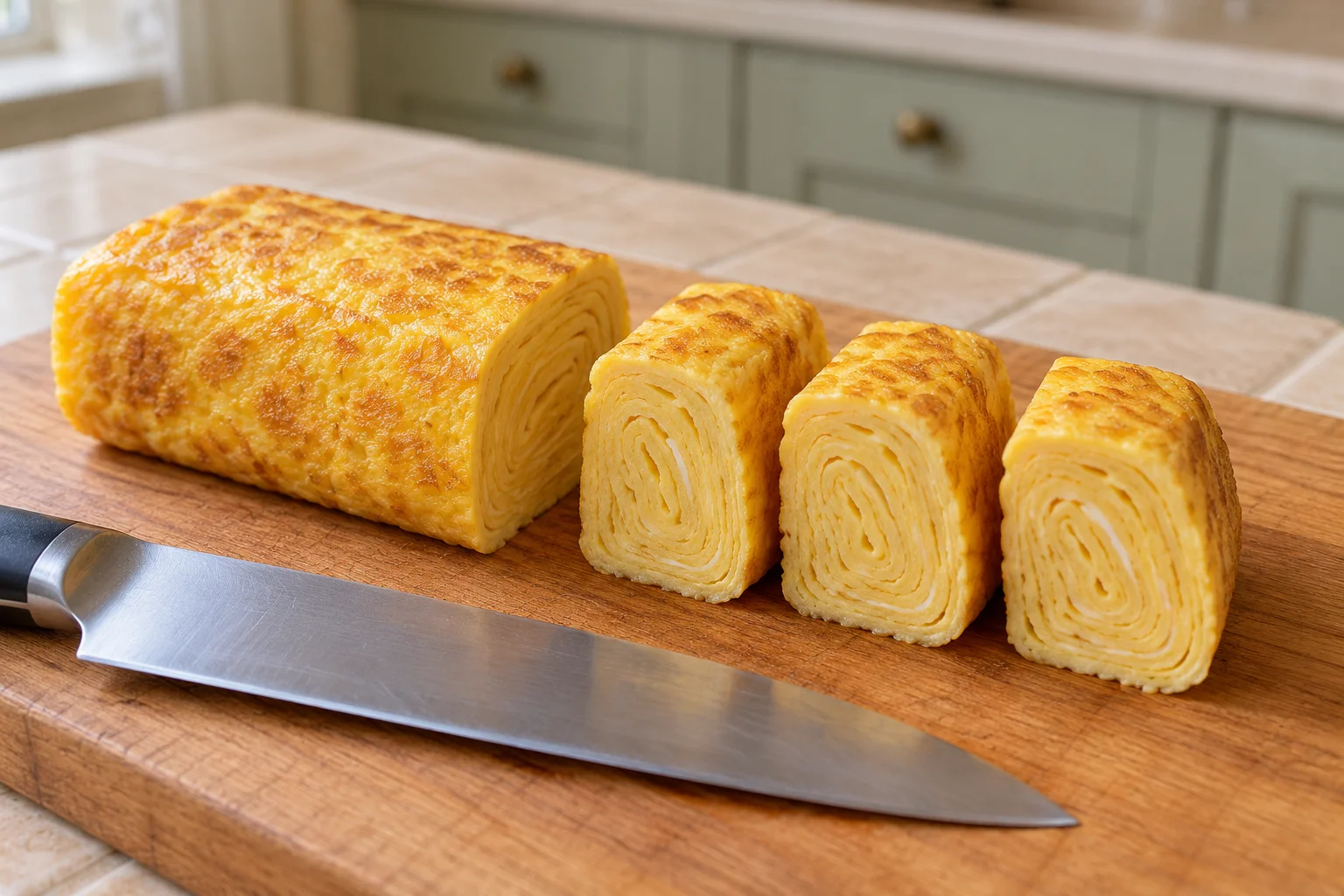
- Slice into pieces and serve warm or at room temperature with grated daikon.
Substitutions
- Tamagoyaki pan: A small nonstick skillet works fine — just fold the omelet into thirds instead of rolling it into a perfect cylinder.
Beyond the recipe
Alternate recipes
Go deeper
Watch & shop
As an Amazon Associate, FlixNFood earns from qualifying purchases.